Rust Solo Survival With 14,782 Hours
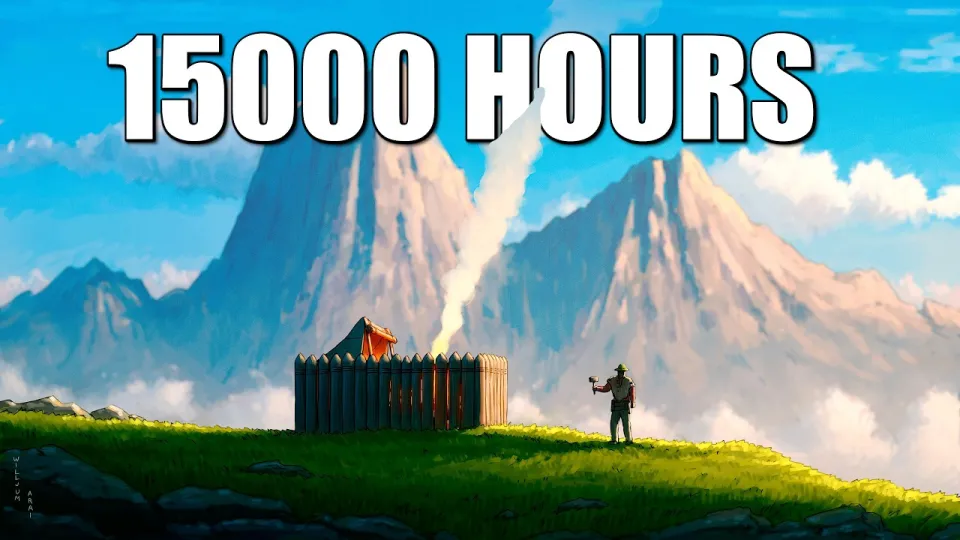
Video: How a solo with 14,782 Hours plays official rust...
Want articles like this for your own video to promote it on YouTube and Google? Order them through the Telegram bot @sat_sit_bot. Articles with your video embedded are written and posted by the bot itself — on popular topical sites (no ads). Try it free: 50 articles on us.
· based on the channel Willjum
Key takeaways
- The featured player has logged 14,782 hours in Rust, roughly 1,180 hours per year across a 12.5-year span.
- The run is a solo wipe on an official vanilla server, with no team, no clan and no modded multipliers.
- A 2x2 stone base with an airlock and full stone honeycomb is the standard solo opening shown.
- Scrap is spent on blueprints and workbenches first; nail guns and primitive weapons carry early fights.
- The video was published by Willjum on 7 June 2026 and runs as a long-form solo story.
Rust solo survival on official servers means one player against full clans, and the run broken down here comes from someone with 14,782 hours logged in the game. That number works out to roughly 1,180 hours a year over 12.5 years, or close to 1,850 hours a year if you count only from the 2018 full release — the equivalent of a full-time job spent on one title. The result is a solo wipe where the advantage is not aim but routine: knowing which fights to take, when to farm, and how to keep a small base alive. The video is sponsored by MANSCAPED, and the Beard Hedger Plus offer page carries the code WILLJUM15 for 15% off plus free shipping.
What 14,782 hours actually changes in Rust solo play
Experience in Rust shows up as economy, not reflexes. A veteran solo spends the first hours of a wipe on a fixed checklist: tool cupboard, sleeping bag, furnace, workbench, and only then gear. The 2x2 stone base with an airlock and full stone honeycomb remains the default because it survives the first raid window while costing little, and it can be expanded upward once the wipe stabilizes.
Three habits separate long-term solo players from new ones:
- Base placement beats base design. A modest base in a low-traffic corner of the map with a nearby road, monument and recycler outlasts a large base on a main road.
- Scrap goes to blueprints first. Workbench level 2, metal tools, medical syringes and a furnace blueprint come before any weapon blueprint.
- Every trip out has a purpose. Farming runs are timed, looted and returned; wandering is how solos lose kits.
The hours also explain the calm. Someone who has lost thousands of kits does not panic at a crossbow fight or a bear behind a rock.
Base building and the candle hat problem
The candle hat is a running joke in this community: a player announces they will build with a candle hat so they can see, then never equips it again. The practical lesson stands — light sources matter at night, but torches and campfires telegraph your position to every passing duo, so most experienced solos build in daylight or use a small furnace room with the door closed.
For the base itself, the standard solo sequence is:
- 2x2 core with an airlock and a double door, upgraded to stone before the first night.
- Honeycomb on at least two sides, plus a roof layer once metal is available.
- A separate small loot room or stash box away from the core, so a single breach does not end the wipe.
- A mannequin or deployable in a window as a decoy; it draws fire and reveals attackers' positions.
Larger builds are usually credited to dedicated builders rather than the solo themselves. Willjum points viewers to the builder behind the base in this video, Luca.Builds, whose channel covers base design in detail.
Scrap discipline and the nail gun economy
A familiar contradiction in solo Rust is the player who says they prefer not to spend scrap on weapons while crafting their 28th nail gun of the wipe. Nail guns are cheap, forgiving and effective at close range, which makes them the correct default for a solo who cannot afford to lose a rifle kit every hour.
The economy in practice:
- Primitive stage: bow, crossbow, bone knife, wooden armor. Fights are ambushes, not duels.
- Early scrap stage: workbench 1, metal tools, syringes, then workbench 2 and a revolver or custom SMG blueprint.
- Mid wipe: one good kit kept in the base, one disposable kit for roaming. Never roam in the kit you cannot replace.
- Recycling: components from roads and monuments convert into scrap at the recycler; this is the single biggest income source for a solo.
Spending everything on a rifle blueprint before securing tools and meds is the classic solo mistake, and it is exactly what thousands of hours teach you to avoid.
PvP decisions a solo has to make
Jumping two players as a solo is a decision, not a reflex. The veteran approach is to fight only when the odds are stacked: third-partying a fight already in progress, attacking while one opponent is looting, or holding an angle with a clear retreat path. If a fight goes wrong, disengaging costs nothing but pride; a full kit costs an hour of farming.
Concrete rules that show up in high-hour solo play:
- Never take a fair fight against more than one player in the open.
- Carry at least two meds and a bandage stack before roaming.
- Use sound. Footsteps, doors and gunfire tell you where a group is and how many there are.
- Bank loot between fights. A quick run back to base converts a good fight into progress.
A viewer noted the irony of a player who can hear a footstep from 50 yards away missing a bear directly behind him — wildlife remains the great equalizer on official servers.
Typical questions from viewers of this run
Is 14,782 hours realistic? Yes, over a long period. Spread across 12.5 years it is about 1,180 hours a year, and across the years since the 2018 full release it is closer to 1,850 a year — heavy, but comparable to a part-time or full-time job. Some of those hours are also idle time with the game running.
Does this approach work on a high-population vanilla server? The methods transfer, but the risk does not scale down. On a server with 1,000 players at wipe, a fresh 2x2 can be raided the same night, and even a good start can end with a bone-knife naked at a green card monument. Playing low-population or 2x servers is a legitimate way to learn the loop before committing to official.
Why watch Rust instead of playing it? Many viewers never touch the game. The appeal is the variety of stories a single wipe produces and the calm, music-driven long-form format that channels like Willjum build around it.
Links from the video
- MANSCAPED offer: https://manscaped.com/willjum
- Patreon: https://www.patreon.com/Willjum
- Twitch: https://www.twitch.tv/willjum
- Twitter: https://twitter.com/willjum1
- Creative Commons license referenced in the credits: http://creativecommons.org/licenses/by/4.0/
Conclusion
A 14,782-hour Rust solo is not a different game — it is the same wipe played with fewer mistakes. The pattern is consistent: a small stone base with an airlock, scrap routed into blueprints and tools, cheap weapons like the nail gun until the economy allows better, and fights taken only on favorable terms. Willjum's breakdown of this official-server run is the clearest illustration of that routine, and his channel is worth following for more solo stories in the same format. If you want the sponsor deal from the video, the MANSCAPED page for Willjum has the Beard Hedger Plus at 15% off with free shipping using code WILLJUM15.
Questions & answers
How many hours does the Rust solo in this video have?
The player has 14,782 hours logged in Rust. That is roughly 1,180 hours per year if spread over 12.5 years, or about 1,850 hours per year counting only from the 2018 full release. Part of that total is likely idle time with the game left running.
What base do experienced Rust solos build first?
A 2x2 core with an airlock, upgraded to stone before the first night, plus honeycomb on at least two sides. It is cheap, quick to build and survives the first raid window better than a large exposed base. A decoy such as a mannequin in a window can draw fire and reveal attackers.
Should a solo spend scrap on weapons or blueprints?
Blueprints and tools come first: workbench level 2, metal tools, syringes and furnaces. Cheap weapons like the nail gun and crossbow cover early fights, and a single good kit is kept in the base for later. Buying a rifle blueprint before securing the economy is the classic solo mistake.
Is this playstyle viable on a high-population official server?
The methods transfer, but the risk is much higher. On a server with around 1,000 players at wipe, a fresh base can be raided the same night and a good start can end at a green card monument. Many players learn the loop on low-population or 2x servers before moving to official.
Source: How a solo with 14,782 Hours plays official rust... · Markdown version